
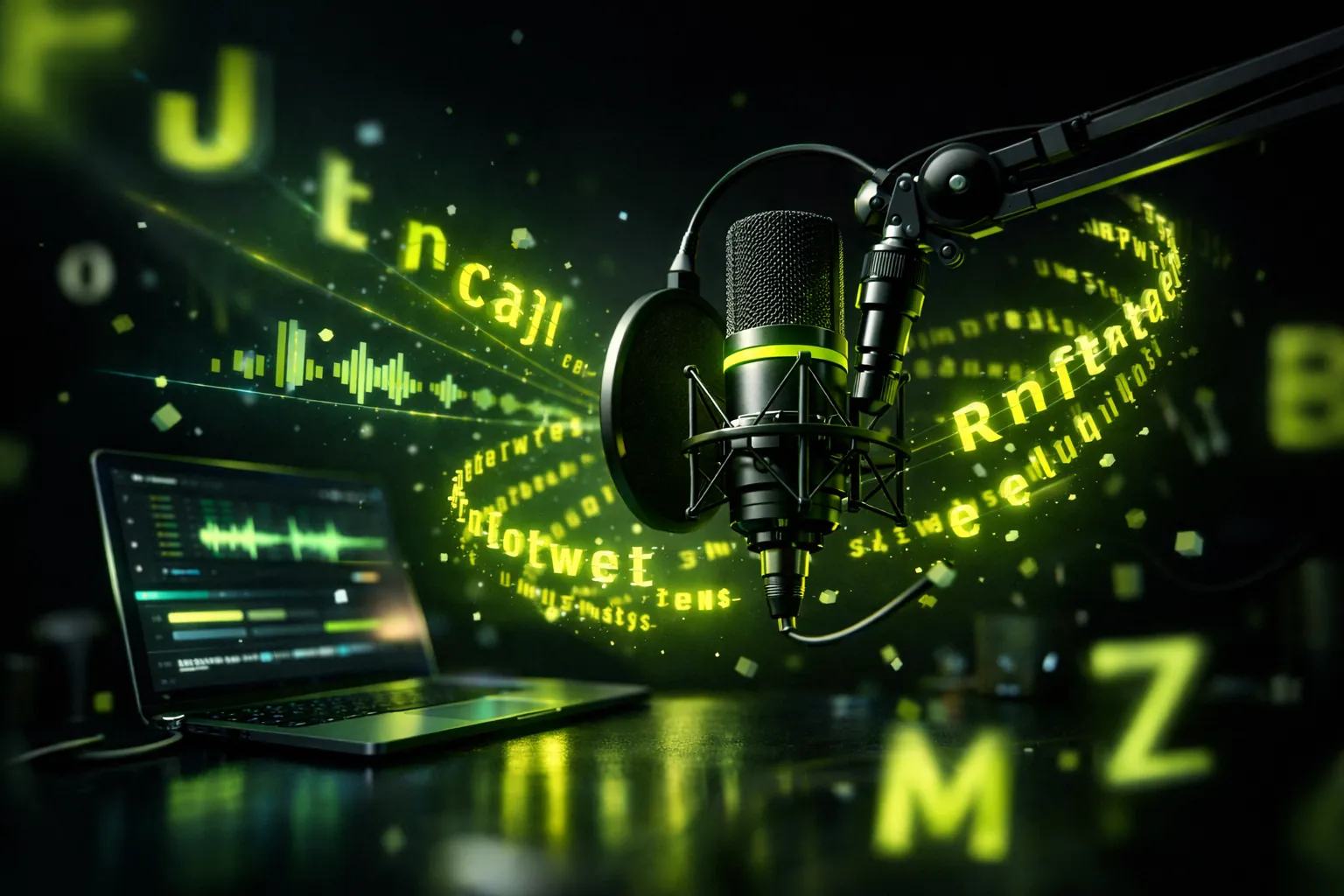
So you want to record a podcast
You do not need a studio, a producer, and a $1,000 microphone to start a podcast.
You mostly need three things:
- A clear idea of what you want to say.
- A decent way to capture your voice.
- A setup that does not make you dread hitting record.
Let us walk through how to actually record a podcast without getting lost in gear talk or perfectionism.
Along the way, I will show you how to turn those recordings into something people actually finish watching or listening to, not just abandon at minute three.
Step 1: Get clear on what you are making
Before you open any app or plug in any mic, answer a simple question:
What is this episode about, in one sentence?
If you cannot say it in one line, you will ramble. And rambling is the fastest way to lose listeners.
You do not need a full script, but you do want:
- A one line summary
- 3 to 5 main points or beats
- A simple way to close the episode
Think of it like a road trip. You do not need to know every turn, but you should at least know the destination and the major highway exits.
A lot of podcasters now record first, then turn that same audio into clips, essays, or animated text videos. That is actually why we built Hypnotype in the first place. You talk once, and your words become those high retention kinetic text animations you see in the Founders Podcast style, without a full video editor setup.
If you like the idea of recording once and reusing everywhere, keep that in mind while you plan your episodes.
Step 2: Pick a recording space that forgives you
Your room matters more than your mic.
You want a space that:
- Is quiet most of the time
- Does not sound like a bathroom or an empty gym
Bare walls and big empty rooms cause echo. Your voice bounces everywhere, and your recording ends up sounding harsh and distant.
You do not need to build a studio. Small improvements help a lot:
- Record in a smaller room if you can
- Close closet doors and windows
- Have soft stuff around you like a couch, curtains, rugs, or even a blanket on the wall near your desk
- Turn off noisy fans, AC units, or any buzzing lights during recording
If you can, do a 10 second test: record yourself talking, then listen back with headphones. If you hear a lot of room echo or background noise, move closer to soft surfaces and try again.
Step 3: Choose a mic that fits your life
Here is the honest breakdown.
You can start with:
- Your phone with a simple recording app
- A USB microphone that plugs straight into your laptop
You only need to think about two things:
- Distance: Keep the mic close to your mouth, but not touching. About a fist away.
- Direction: Talk into the right part of the mic. Some mics are meant to be spoken into from the side, others from the top.
If you are buying a dedicated mic, look for a USB mic that is made for voice, not music instruments. It should say something like "podcast" or "streaming" or "vocal" in the description.
A cheap mic in a good room with good mic technique will beat an expensive mic in a noisy echo box.
Step 4: Use simple recording software
You do not have to learn a scary audio workstation to record podcasts.
Here are some simple paths:
- On a Mac: QuickTime, GarageBand, or any basic recording app
- On Windows: Audacity, or even the built in Voice Recorder to start
- On phone: Any voice memo app
- Remote with guests: Tools like Zoom, Riverside, or similar platforms
Pick one tool and stick with it until hitting record feels like muscle memory.
Keep your settings simple:
- Record in mono (one channel) is usually enough
- Sample rate 44.1 kHz or 48 kHz is fine
- Save everything in a lossless or high quality format if possible (WAV or high bitrate MP3)
The goal is not to be an audio engineer. It is to remove friction so you can actually record consistently.
Step 5: Set your levels before you start
This part sounds technical, but it is really just about not being too loud or too quiet.
When you speak into the mic, your recording app will show some kind of meter.
Aim for:
- Your normal speaking voice hitting around the middle of the meter
- Peaks that do not slam into the red at the top
If the meter is barely moving, turn the input gain up. If it is often hitting red, turn it down.
Do a test:
- Hit record.
- Talk for 20 seconds at your normal speaking volume.
- Clap once.
- Stop and listen.
If your voice is clear and not distorted on loud words or the clap, you are good.
Step 6: Talk like a human, not a broadcaster
You are not auditioning for radio.
People listen to podcasts because they want to feel like they are in the room with you.
So while you record, keep a few little habits in mind:
- Look at a single person in your head, not "the audience"
- Smile occasionally, it actually changes how your voice sounds
- Pause when you need to think, do not rush to fill every silence
- If you mess up a line, stop, take a breath, and say the sentence again from the start
Those repeated takes make editing easier later. It is much simpler to cut out a bad sentence and keep the clean one than to rescue a half broken line.
Step 7: Do light editing, not surgery
You do not have to become a full time editor to make your podcast listenable.
At the start, focus on just a few things:
- Chop off awkward long silences
- Remove obvious mistakes or repeated sentences
- Lower or mute loud background noises if they jump out
If you want a bit more polish later, you can:
- Add a simple intro and outro music
- Gently reduce background noise with built in tools
- Normalize the volume so it is consistent throughout
But do not wait to publish until everything is perfect. You will get better by making more episodes, not by obsessing on one.
Step 8: Think beyond audio while you record
Here is the fun part. Your recording is not just a podcast.
It is potential:
- YouTube videos
- Social clips
- Newsletter content
- Essay drafts
- Kinetic text animations with every word synced to your voice
This is why word accurate transcripts matter.
When your audio is transcribed at the word level, you can:
- Search your own speech for good lines
- Cut clips around exact phrases, not just rough timestamps
- Turn a powerful sentence into an animated quote people actually stop to watch
We built Hypnotype around this idea. It takes your spoken audio, uses Whisper level transcription, syncs each word to your voice, and then lets you turn all that into clean, Founders style text animations without learning a full video editor.
You drag and drop your audio or podcast episode, and you get this word perfect, minimal animation that keeps people watching on TikTok, YouTube, or Twitter when they would normally scroll away.
Start Automating Your Kinetic Typography
Don't let manual editing slow you down. Hypnotype turns your audio into engaging video essays with kinetic typography in minutes.
If you are already recording podcast episodes, you are sitting on a goldmine of content. Hypnotype helps you turn those recordings into high retention text videos without messing with complicated timelines.
Step 9: Create a simple recording ritual
The biggest challenge with podcasting is not the tech. It is consistency.
You can make that easier with a tiny ritual:
- Pick one recording day and time each week
- Use the same mic, same space, same setup
- Keep a running list of episode ideas in your notes app
Before you hit record, run through a mini checklist:
- Phone on silent
- Notifications off
- Mic connected and selected
- Quick 10 second test recording
Once that is smooth, recording will feel less like a big event and more like a normal part of your week.
Step 10: Accept that episode 1 will not be your best
Your first few episodes will feel awkward.
You will hear your own voice and cringe a little. You will notice every "uh" and "um".
That is normal.
Everyone you admire in podcasting has old episodes they would rather forget. The only reason they got good is because they kept recording through that awkward phase.
The goal of recording your early episodes is not perfection. It is momentum.
Record, release, learn one thing, then do the next one.
And while you are at it, set yourself up so every minute you record can be reused.
Turn your audio into:
- Clips that feel made for social, not just chopped from a full episode
- Animated text that hooks people even if they are watching with sound off
- Written ideas you can expand into essays or email newsletters
Tools like Hypnotype exist exactly for this reuse problem. You should not have to become a motion designer to get that clean, kinetic typography look. You should be able to drag in your podcast and get those word synced animations out the other side.
Wrap up
Recording podcasts does not have to be mysterious or technical.
Find a forgiving room, use a simple mic, pick one recording app, and talk like you are explaining something to a smart friend.
Then make your audio work harder for you.
If you are already recording, you are halfway to having a full content engine. Turn that voice into text, into visuals, into moments people remember.
Start Automating Your Kinetic Typography
Don't let manual editing slow you down. Hypnotype turns your audio into engaging video essays with kinetic typography in minutes.
Ready to turn your podcast recordings into those addicting, word synced text animations people actually watch to the end? Try feeding an episode into Hypnotype and see what your voice looks like on screen.